South Indian · Breakfast
Poha (South Indian aval upma with peanuts)
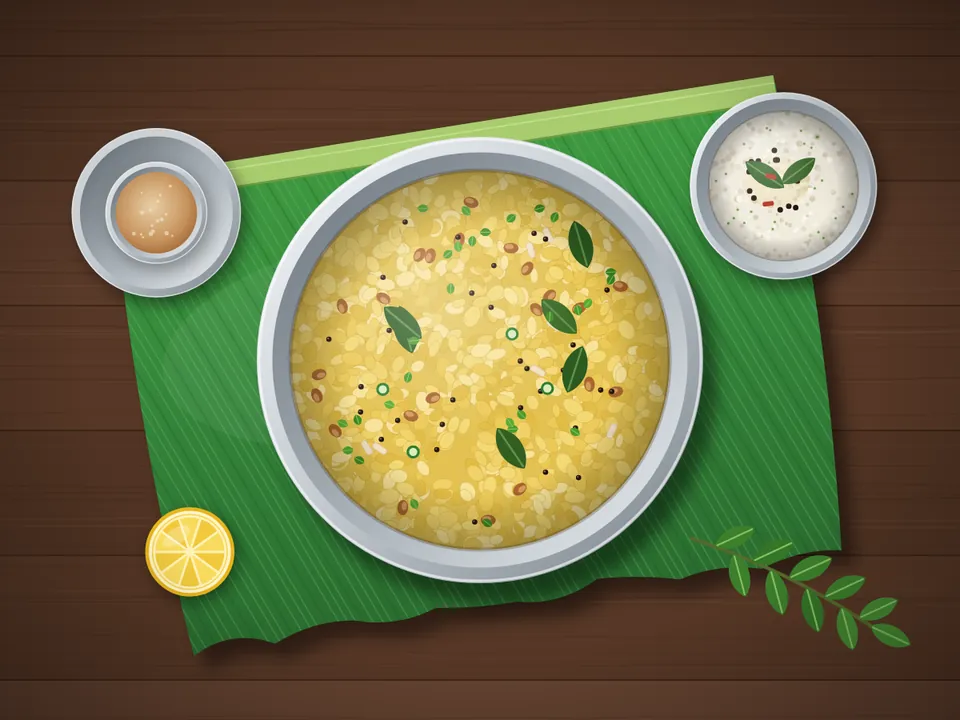
Poha, known in the South as aval upma, is a quick tempered dish of flattened rice with crunchy peanuts, curry leaves, onion and a squeeze of lemon. It is light, gluten-free and comes together in about 20 minutes, which makes it among the easiest hot breakfasts for busy mornings. Turmeric gives it a cheerful yellow colour.
- Prep10 min
- Cook15 min
- Total25 min
- Servings3
- Per serving≈350 kcal
Ingredients
Tap an ingredient to tick it off as you cook.
Method
- Put the poha in a colander and rinse it under running water for 20–30 seconds, tossing gently, until just soft. Drain well and leave it for 5 minutes.
- Sprinkle the turmeric, salt and sugar over the poha and fluff it gently with your fingers so the grains stay separate.
- Heat the oil in a wide pan over medium heat. Add the peanuts and fry for 2–3 minutes until crunchy and golden, then lift them out onto a plate.
- In the same oil, add the mustard seeds. When they splutter, add the urad dal and chana dal and fry until light golden.
- Add the curry leaves, green chillies and ginger and stir for a few seconds. Add the onion and cook for 2–3 minutes until soft and translucent.
- Add the seasoned poha and the fried peanuts. Toss gently, cover and cook on low heat for 2–3 minutes until heated through.
- Turn off the heat, add the lemon juice, coriander and coconut and mix lightly. Taste for salt and serve hot.
About this dish
Flattened rice is called aval in Tamil and Malayalam, avalakki in Kannada and atukulu in Telugu. In Karnataka the dish is known as avalakki oggarane or avalakki upkari, and in Andhra as atukula upma. Unlike the sweet-sour poha of Maharashtra and Madhya Pradesh, the South Indian version uses a tempering of mustard seeds, urad dal and chana dal for extra crunch.
Poha is made by parboiling rice, then flattening and drying it, so it only needs a quick rinse to soften. Thick poha is best here, as thin poha turns mushy. Many families add grated coconut at the end, and some stir in peas, carrot or potato. It is a common breakfast and also a popular evening snack with filter coffee or tea.
Tips
- Never soak poha in a bowl of water; a quick rinse is enough, or it turns into a paste.
- Use thick (medium) poha, as thin poha breaks and becomes mushy in cooking.
- Add lemon juice only off the heat so the poha does not taste bitter.
Serve with
Serve hot with coconut chutney or a cup of filter coffee.
Goes well with: Coconut Chutney, Rava upma